Securing AI Interactions at TechHub Pulse
👤
Hans Bacares
📅
March 5, 2026
About the Event
The transition from passive chatbots to autonomous agentic systems has fundamentally altered the digital threat landscape, moving the focus from "what AI says" to "what AI does."
As we delegate real-world tasks to models that can browse the web, access sensitive databases, and execute code, our defense strategy must evolve from simple string sanitization to a comprehensive Operational Security (OpSec) framework.
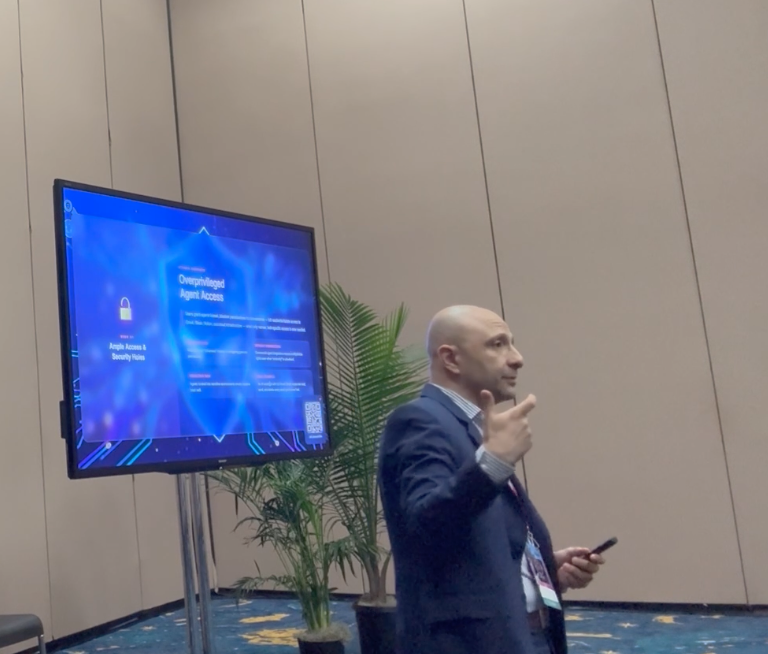
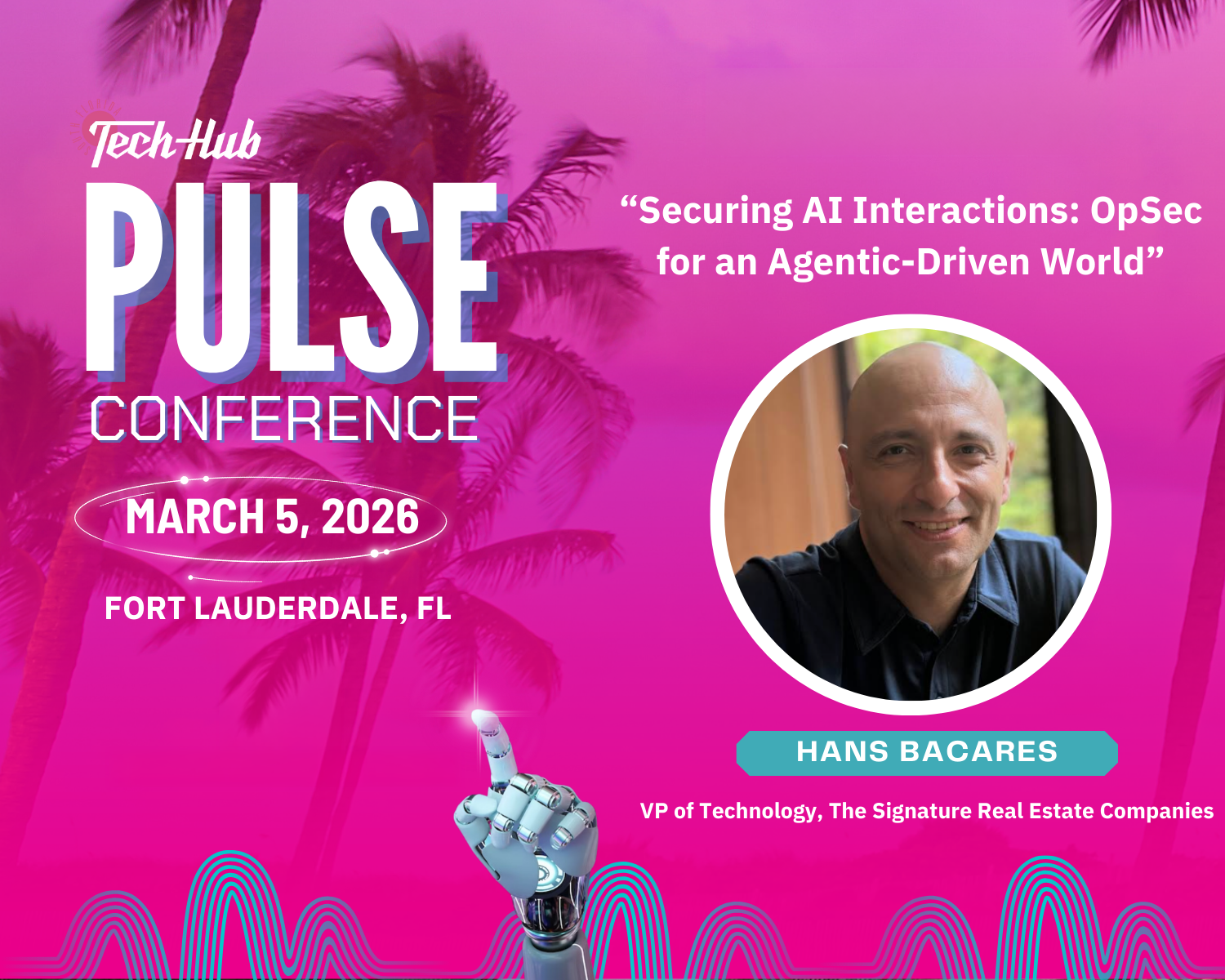
In this session, which took place during South Florida Tech Hub's Pulse conference we explored the architectural necessity of treating AI agents as untrusted entities, focusing on the critical layers of authentication, responsibility, and systemic boundaries that must exist between an LLM’s intent and a system’s execution.
As we delegate real-world tasks to models that can browse the web, access sensitive databases, and execute code, our defense strategy must evolve from simple string sanitization to a comprehensive Operational Security (OpSec) framework.
In this session, which took place during South Florida Tech Hub's Pulse conference we explored the architectural necessity of treating AI agents as untrusted entities, focusing on the critical layers of authentication, responsibility, and systemic boundaries that must exist between an LLM’s intent and a system’s execution.
📸 Gallery